Distilled, RO, bottled, rain or tap: which water should you give your plants?
Distilled, reverse-osmosis, bottled, rain and tap water each have different mineral and contaminant profiles. Here is what each means for houseplants.
- Removes chlorine, chloramine and fluoride
- Adds back 20+ minerals
- 30-day money-back guarantee
Free shipping · 30-day money-back guarantee · plus sales tax where applicable

Do you need to switch from tap?
Brown tips or crisp edges on sensitive plants.
Your city fluoridates or uses chloramine, or you have a softener.
You see white mineral crust on soil or pots.
Two of three and yes:
Why people switch away from tap
Chlorine, chloramine, fluoride, sodium and old-pipe lead. Sensitive plants show it as brown tips and edges; tougher plants just grow a little worse than they could.
Distilled and reverse osmosis: almost no minerals
Distilled and reverse-osmosis water contain almost no minerals, including calcium and magnesium.
Bottled and spring water: mineral content varies
Mineral content varies by brand and batch. Some spring waters are mineral-rich; some are sodium-heavy.
Rainwater: great, when you have it
Rainwater is soft, mineral-light and chlorine-free. Collect it from a clean surface and keep it covered.
Filtered and remineralized from the tap
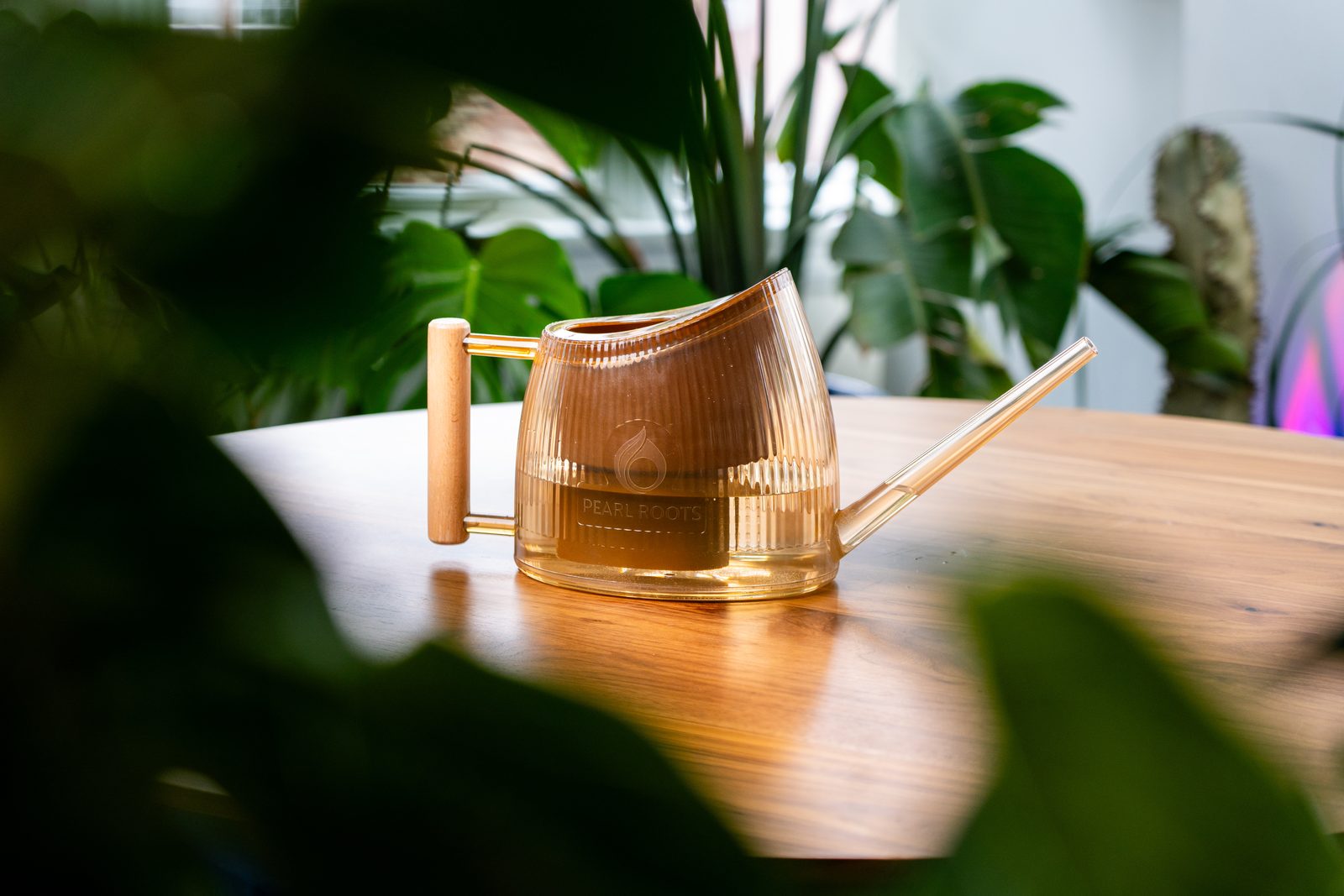
The watering can filters chlorine, chloramine, fluoride and lead from unsoftened tap water, then adds back 20+ minerals, including calcium, magnesium, potassium and iron.
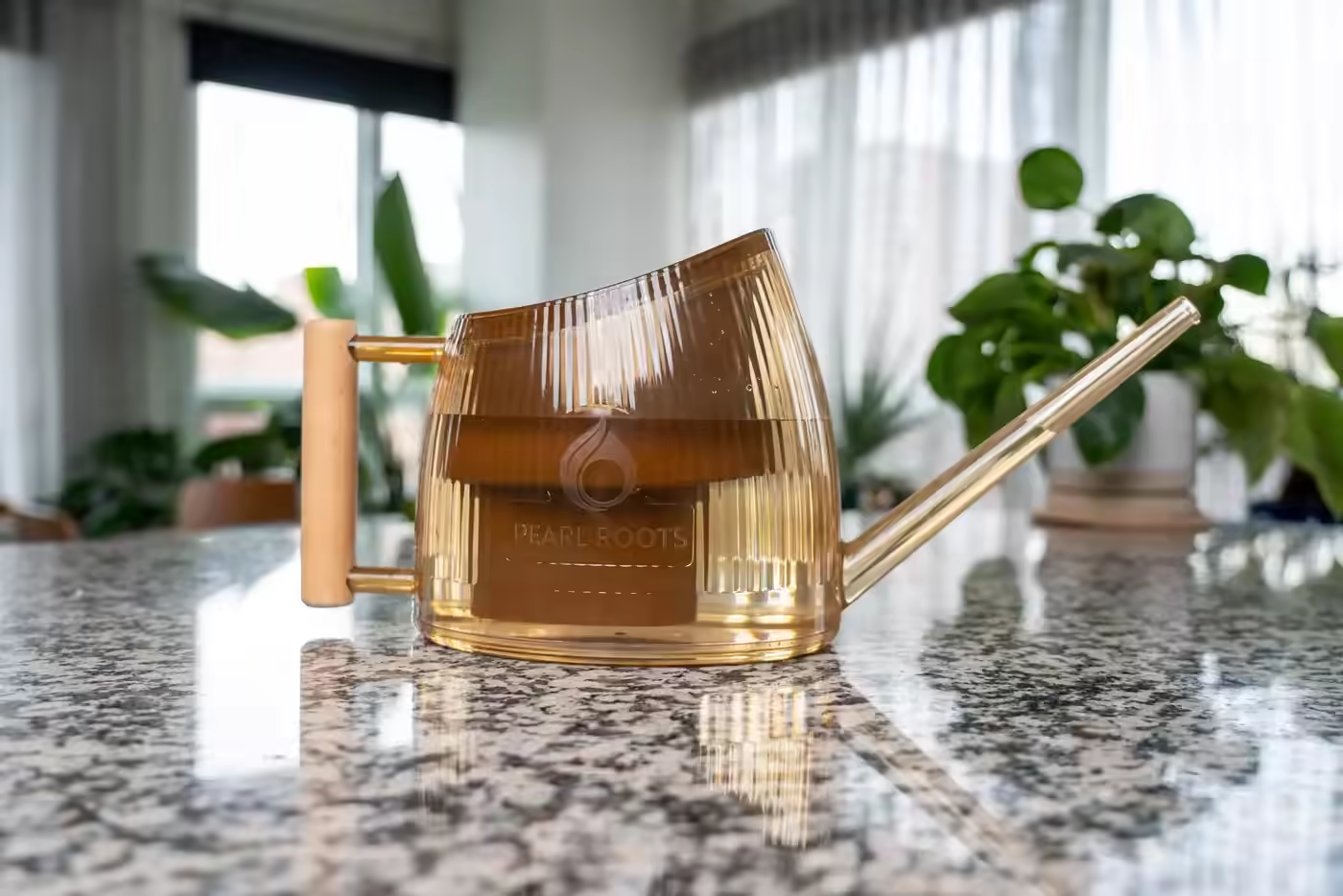
Watering Can With Filter and Remineralizer for House Plants
Filters chlorine, chloramine, fluoride and lead as you fill it, then adds back 20+ minerals
Free shipping · 30-day money-back guarantee
plus sales tax where applicable
The Tap Water Plant Guide
Which 12 houseplants react to tap water, how to tell water damage from overwatering, and four ways to fix it — including the free ones.
Frequently asked questions.
Better water, tonight's watering.
- Free shipping · 30-day money-back guarantee
- Free shipping
- 30-day money-back guarantee
- Replaceable filter packs