
Calathea crispy edges? Start with your water, not the humidifier.
Prayer plants have a reputation for being fussy about humidity. Most of the time they're fussy about water. Chlorine, fluoride, hard-water minerals and softener salt all show up as crisp brown edges on these thin leaves.
- Removes chlorine, chloramine and fluoride
- Adds back 20+ minerals
- 30-day money-back guarantee
Free shipping · 30-day money-back guarantee · plus sales tax where applicable
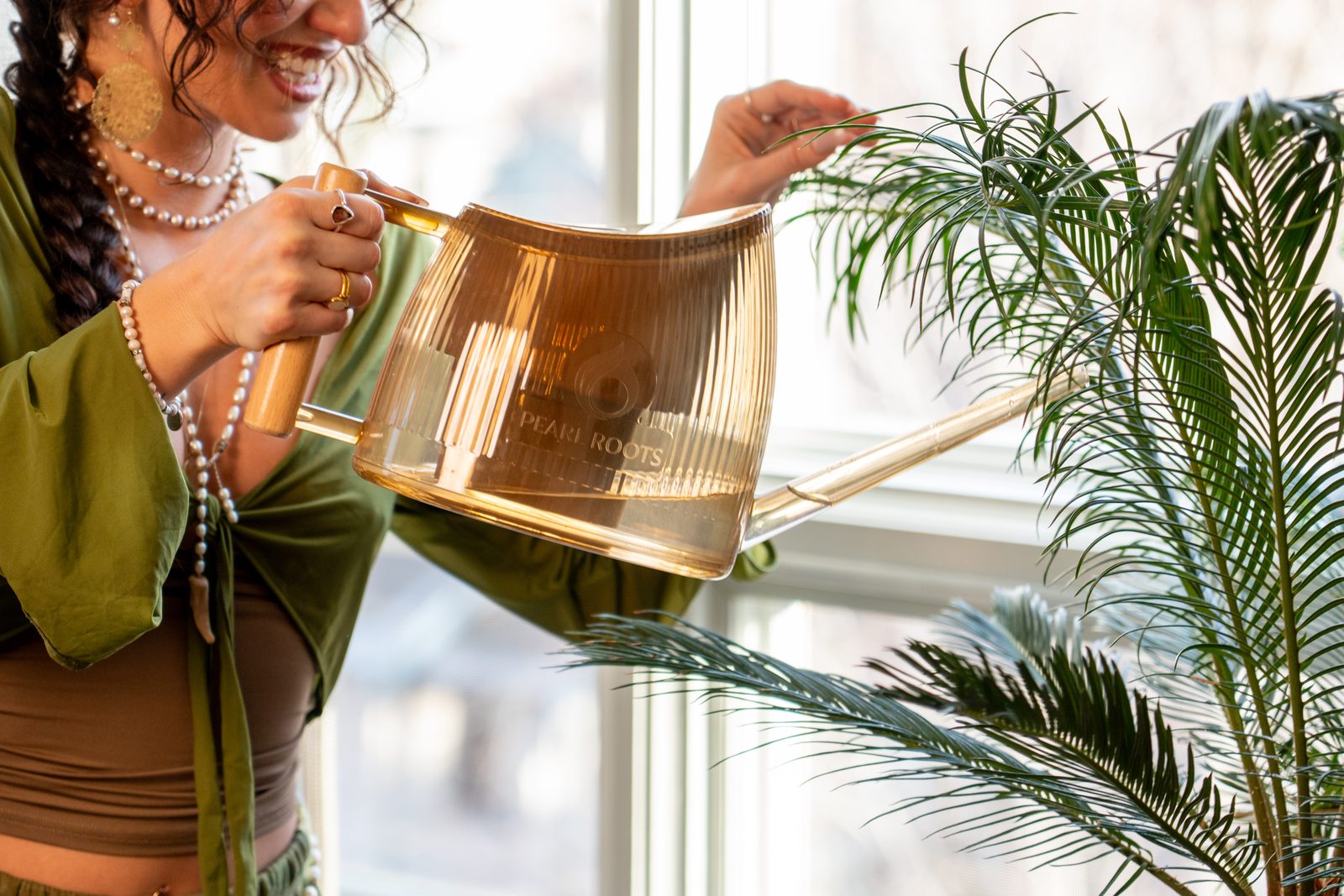
Is it your water?
Edges and tips brown and crisp while the center of the leaf stays healthy.
It happens even in a humid room or with a humidifier running.
You water from the tap; new leaves unfurl fine and then brown within weeks.
Two of three and it's the water:
Why prayer plants scorch at the edges
Calatheas, marantas, stromanthes and ctenanthes have thin, wide leaves that move a lot of water. Whatever's dissolved in it ends up at the margins. Fluoride and chlorine by-products kill the edge cells; hard-water minerals and sodium do the same more slowly.
This is why many calathea owners use distilled or rainwater. Distilled water contains almost no minerals, while rainwater is mineral-light and chlorine-free when collected from a clean surface.
Low humidity makes the same damage happen faster, but it isn't the root cause. Fix the water and the humidity tolerance goes way up.
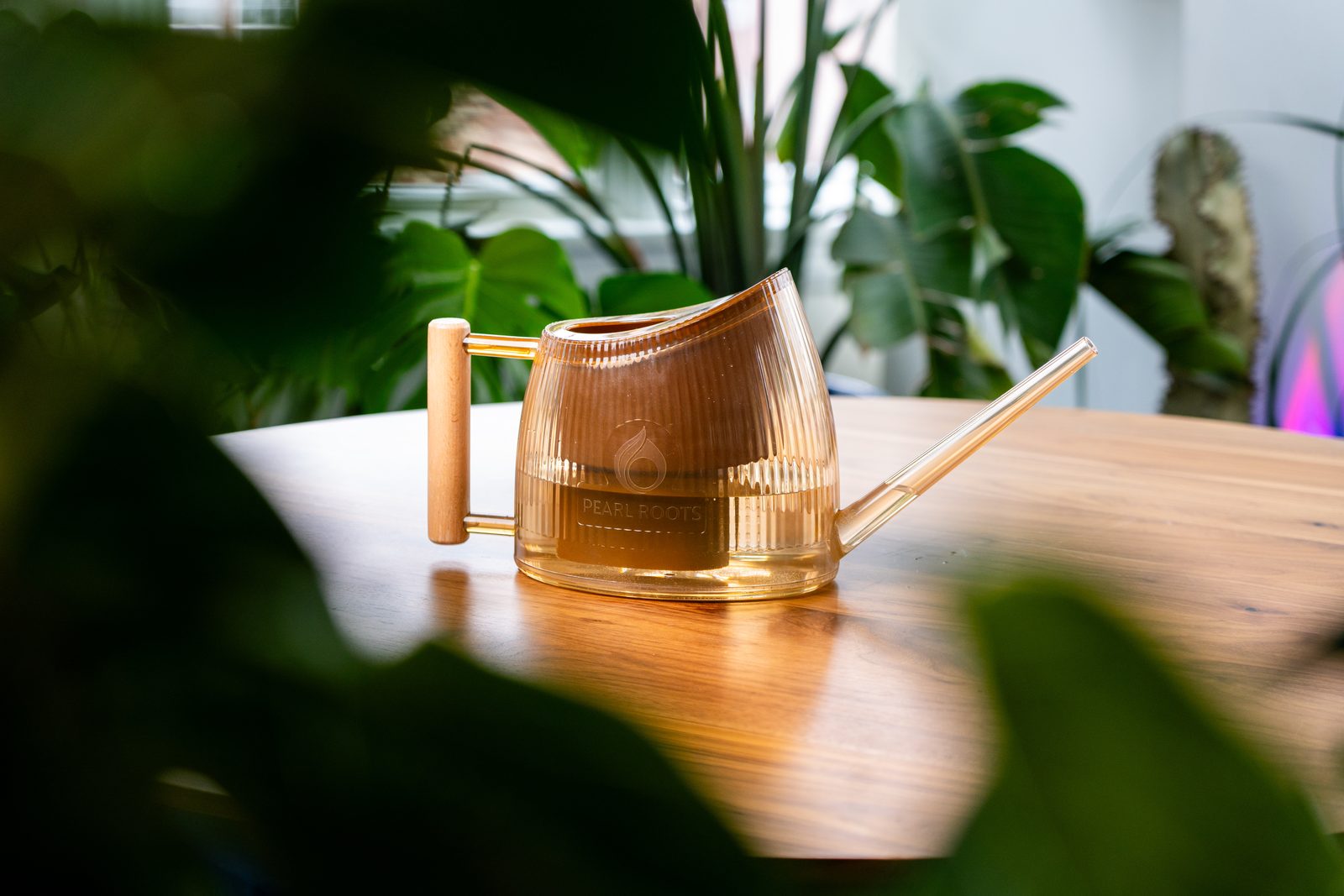
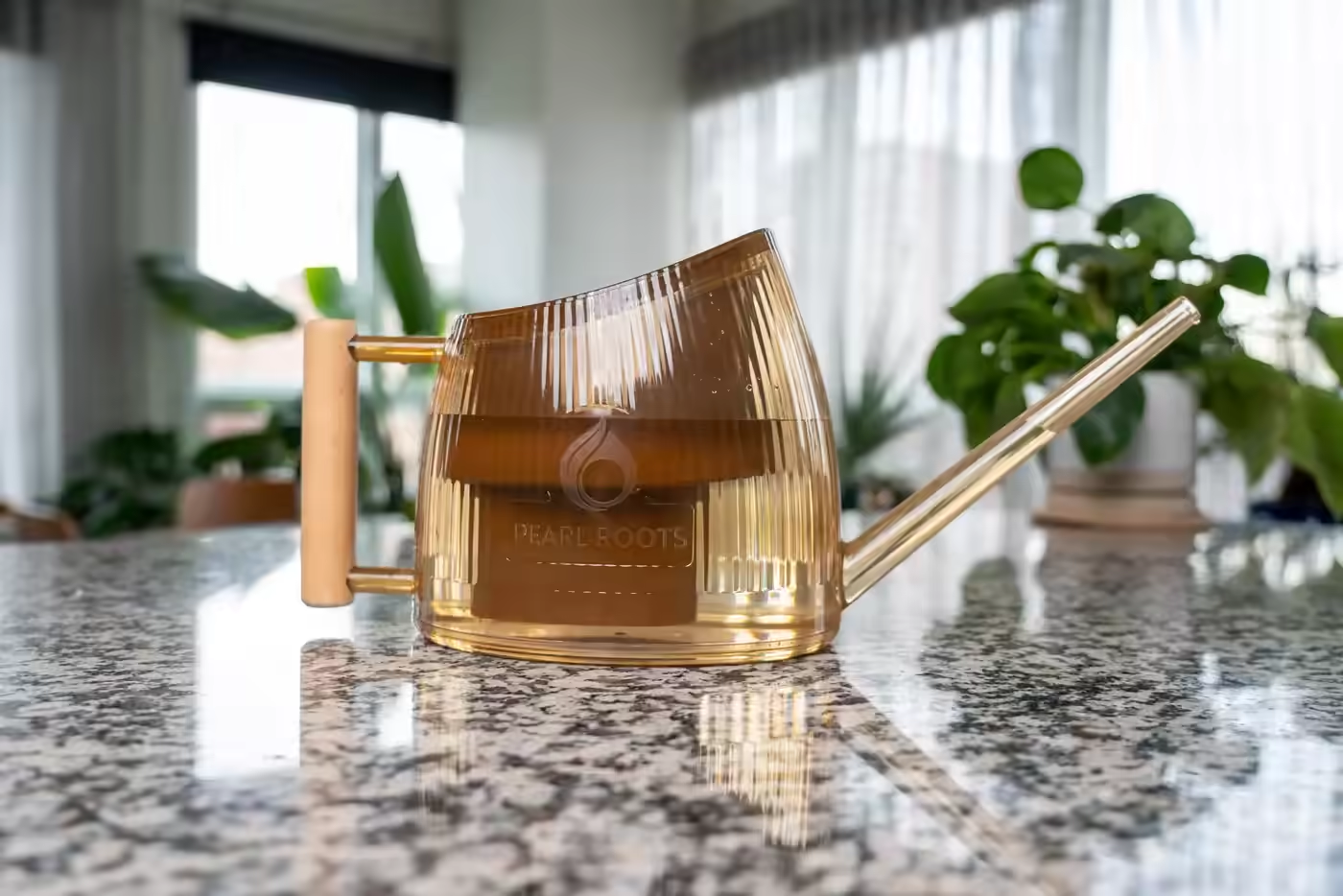
Watering Can With Filter and Remineralizer for House Plants
Filters chlorine, chloramine, fluoride and lead as you fill it, then adds back 20+ minerals
Free shipping · 30-day money-back guarantee
plus sales tax where applicable
Three steps to try
Switch to filtered, remineralized water tonight and keep the soil lightly, evenly moist.
This removes chlorine, chloramine and fluoride. It does not remove hard-water minerals or sodium, so always start with unsoftened water.
Flush the pot once with a full can to rinse out built-up salts.
Let it drain well so salts don't sit in the saucer.
Trim crisp edges with clean scissors following the leaf outline; don't remove whole leaves unless they're mostly brown.
A neat trim keeps the plant looking full. Watch the leaves that open after you change the water.
The Tap Water Plant Guide
Which 12 houseplants react to tap water, how to tell water damage from overwatering, and four ways to fix it — including the free ones.
Watering Can With Filter and Remineralizer for House Plants
Filters chlorine, chloramine, fluoride and lead as you fill it, then adds back 20+ minerals
Free shipping · 30-day money-back guarantee
plus sales tax where applicable
What else it could be
Curling leaves that uncurl after watering are thirst, not damage. Fading pattern and pale leaves are too much light. Spider mites love calatheas — check the undersides for stippling before you blame anything else.
Frequently asked questions.
Better water, tonight's watering.
- Free shipping · 30-day money-back guarantee
- Free shipping
- 30-day money-back guarantee
- Replaceable filter packs