Plant looking sick? Start with the water.
Most houseplant problems trace back to a handful of causes: watering habits, light, pests, humidity - and the water itself. At Pearl Roots we built a filter for the one cause almost nobody checks. Here's how to tell what's actually wrong.
Free shipping · 30-day money-back guarantee
Why water is the overlooked cause.
Municipal water is treated for people, not plants. Chlorine and chloramine keep it safe to drink but stress delicate roots. Fluoride accumulates in leaf tissue. Dissolved mineral salts build up in the pot month after month.
Letting water sit out overnight removes some chlorine - but not chloramine or fluoride, which most cities now use. Distilled and reverse-osmosis water contain almost no minerals.
Is it your water?
Brown crispy tips and edges
Tap water a likely cause? Very likely.
Classic fluoride, chlorine and salt burn. Rule out low humidity and inconsistent watering.
Yellowing leaves
Tap water a likely cause? Often.
Chlorine-stressed roots and high-pH soil lock out iron and magnesium. Rule out overwatering and low light first.
Curling leaves
Tap water a likely cause? Sometimes.
Salt buildup can cause it. Rule out pests, heat stress and underwatering.
Drooping after watering
Tap water a likely cause? Rarely water chemistry.
Usually roots damaged by overwatering. Check drainage and soil moisture first.
Spots on leaves
Tap water a likely cause? Sometimes.
Mineral residue from tap water can mark leaves. Rule out fungal issues and pests.
Dropping leaves
Tap water a likely cause? Sometimes.
Long-term root stress from chlorine and salts. Rule out drafts, repotting shock and light changes.
Slow or no growth
Tap water a likely cause? Often.
Stressed roots can't take up nutrients even when fertilized. Rule out low light and a root-bound pot.
White crust on soil
Tap water a likely cause? Yes - direct evidence.
That crust is mineral and salt buildup from tap water. It's the clearest sign your water is part of the problem.
More than one "often" or "very likely"? Fix the water alongside everything else you rule out.
If it is the tips and edges that are browning, this is the fix.
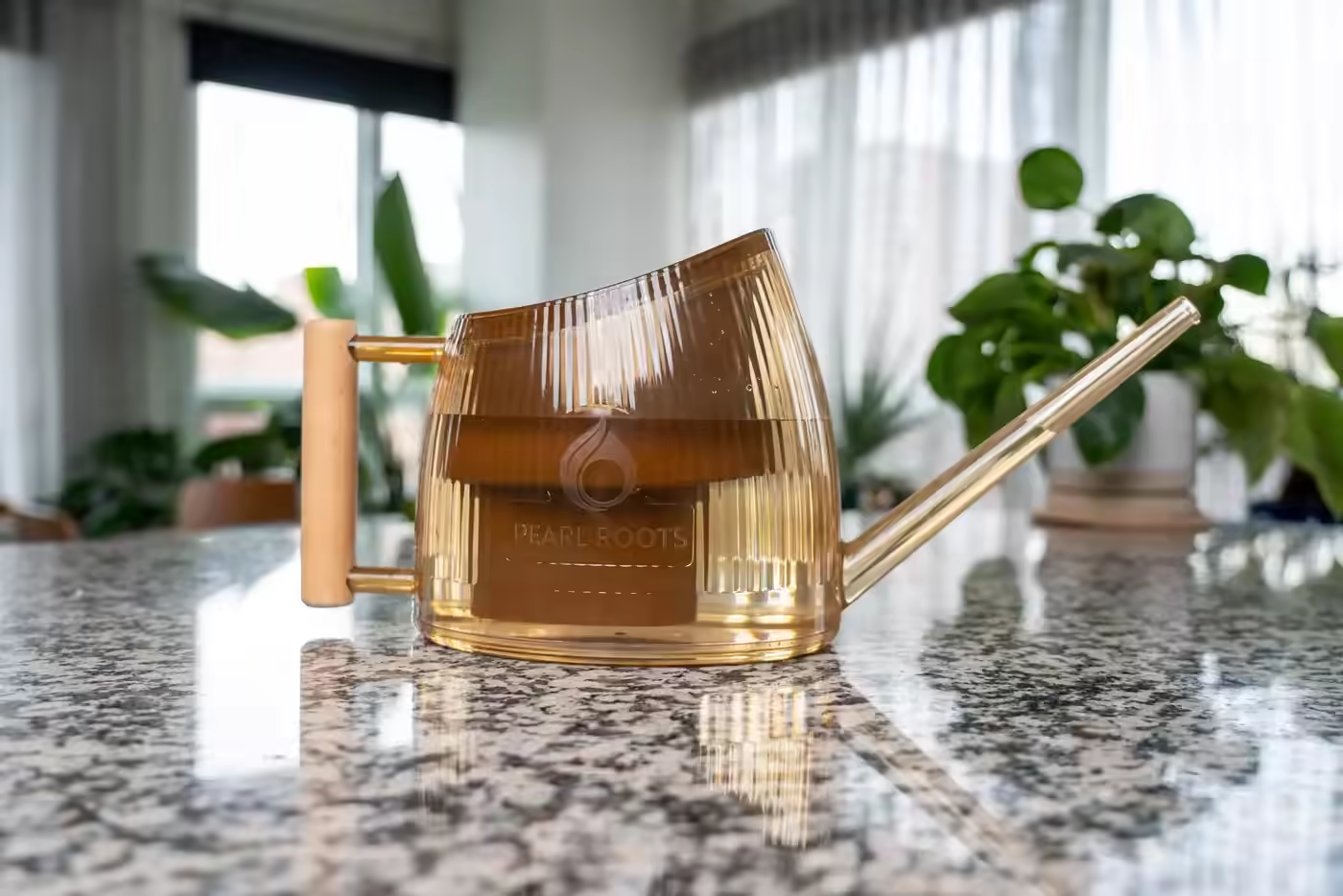
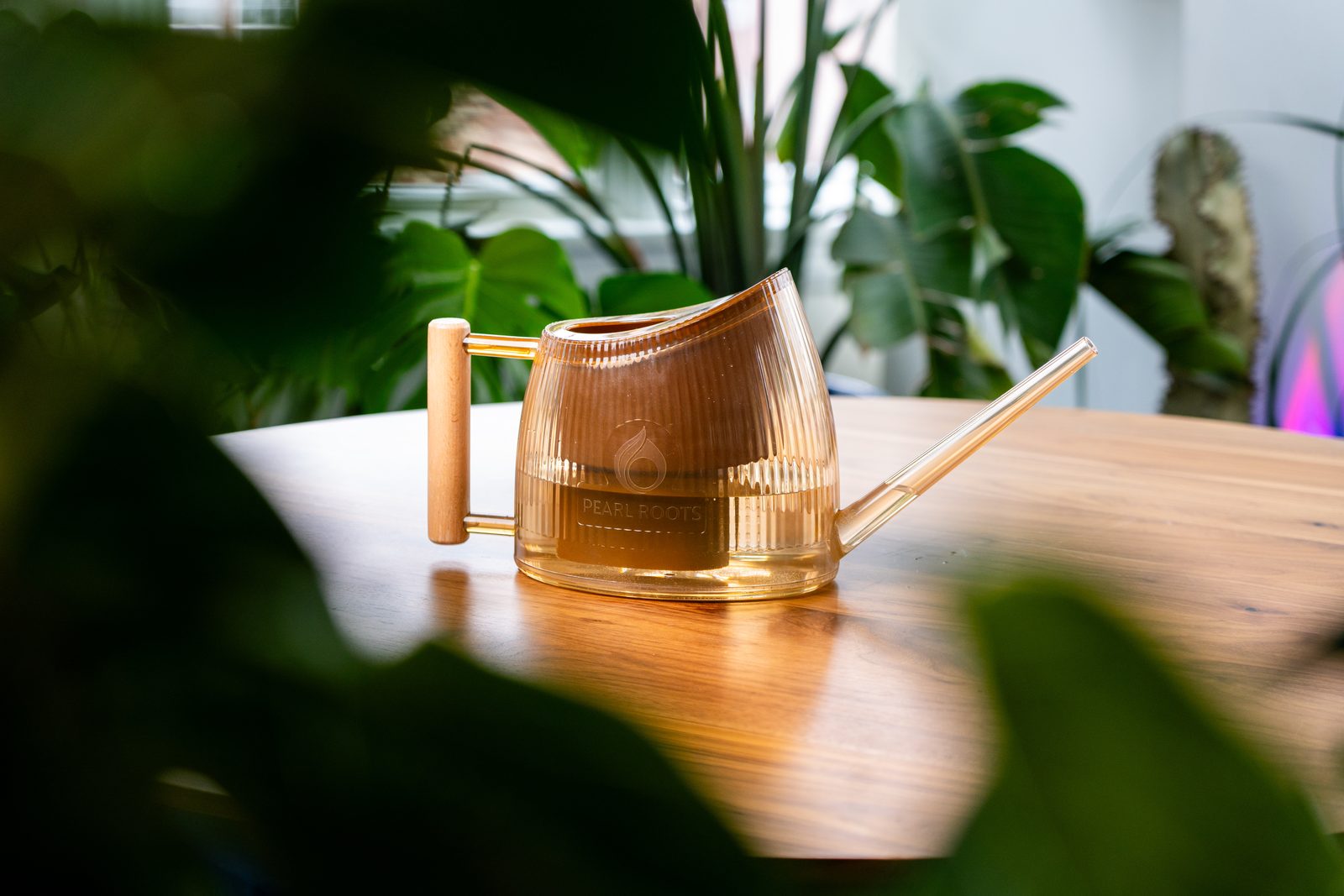
Watering Can With Filter and Remineralizer for House Plants
Filters chlorine, chloramine, fluoride and lead as you fill it, then adds back 20+ minerals
Free shipping · 30-day money-back guarantee
plus sales tax where applicable
Check the usual suspects first.
Overwatering
The #1 killer. Soil that stays wet rots roots; drooping and soft yellow leaves follow. Let the top inch dry.
Light
Too little light causes pale, leggy growth and leaf drop. Match the plant to the window, not the other way around.
Pests
Check under leaves and along stems for spider mites, mealybugs and scale. Sticky residue is a tell.
Humidity
Dry air crisps tropical leaves. Group plants together or run a humidifier in winter.
What Pearl Roots does.
1. Fill from the tap
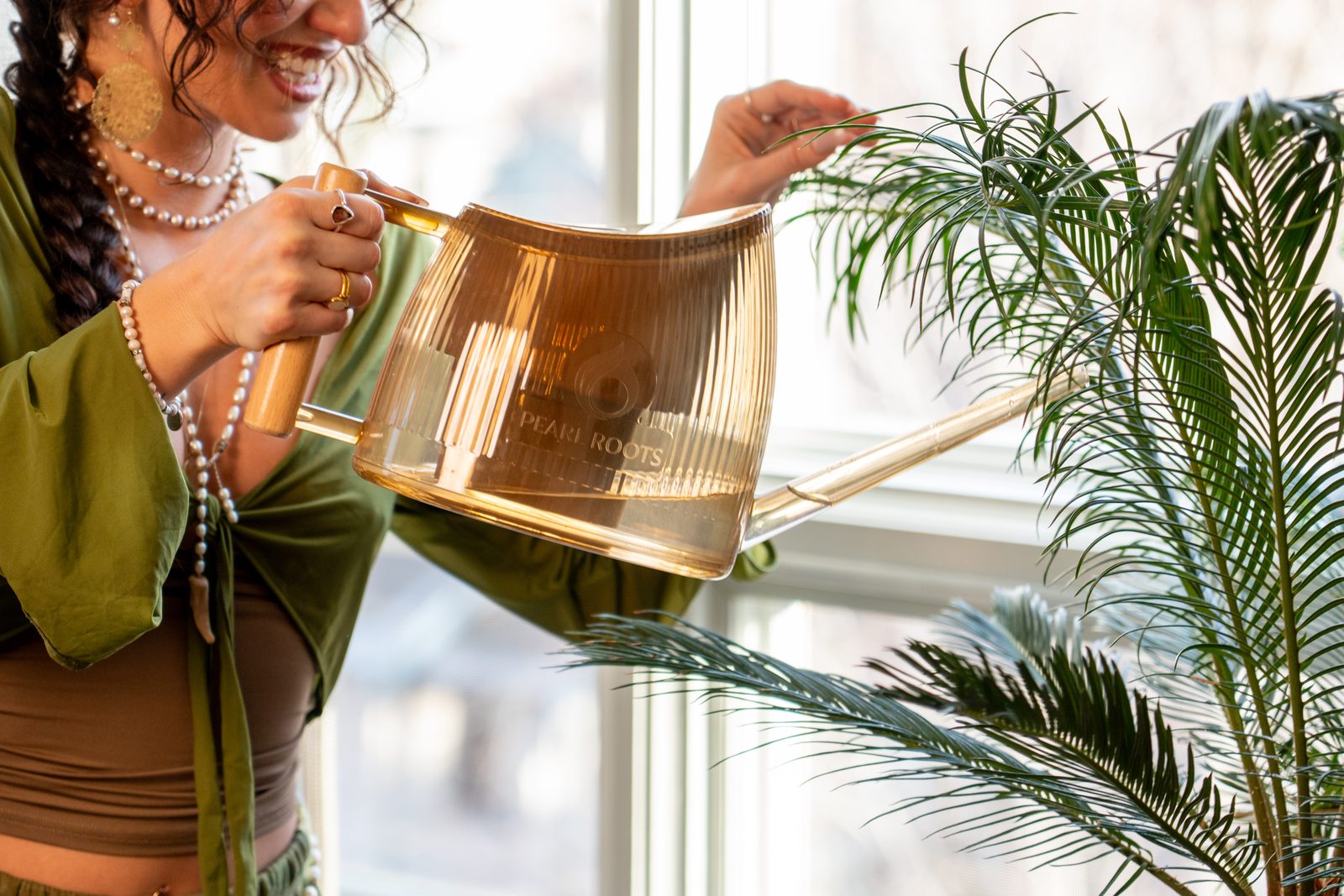
The Pearl Roots watering can has a multi-stage filter built in. You pour with it like any watering can - never a faucet or sink attachment.
2. It removes what hurts
Chlorine, chloramine, fluoride and heavy metals are filtered out as the can fills - including the chloramine that overnight sitting can't touch.
3. It adds back minerals
Then it adds back 20+ minerals, including calcium, magnesium, potassium and iron.
The Tap Water Plant Guide
Which 12 houseplants react to tap water, how to tell water damage from overwatering, and four ways to fix it — including the free ones.
Can't I just let the water sit out?
Sitting overnight off-gasses some chlorine, and that used to be decent advice. But most municipal systems now use chloramine, which does not evaporate - and fluoride doesn't either. Distilled and reverse-osmosis water contain almost no minerals. The Pearl Roots filter removes chlorine, chloramine and fluoride from tap water and adds back 20+ minerals.
Better water, tonight's watering.
- Free shipping · 30-day money-back guarantee
- Free shipping
- 30-day money-back guarantee
- Replaceable filter packs