
Yellow leaves? Check your water before you blame your watering.
Let's be honest: yellowing is most often overwatering or low light. But if your care is right and leaves still pale out, the answer is often in the tap. At Pearl Roots we see the same pattern over and over - water chemistry quietly starving otherwise healthy plants.
Free shipping · 30-day money-back guarantee
Why your water yellows leaves.
Chlorine and chloramine in municipal water stress roots. Stressed roots can't take up nutrients well, even when the soil has plenty - so leaves lose their green.
Hard tap water slowly pushes soil pH up. At higher pH, iron and magnesium become chemically locked in the soil and unavailable to the plant. The result is classic chlorosis: yellowing between the veins on newer leaves while the veins stay green.
Dissolved salts also build up in the pot over months. Each watering adds a little more, and the accumulating salts damage roots and block nutrient uptake.
Is it your water?
Yellow between green veins on new leaves = water chemistry and pH
Yellow with crispy brown tips or edges = fluoride, chlorine or salts
Whole leaves soft and yellow, soil stays wet = overwatering (the filter won't fix that - fix drainage first)
White crust on the soil or pot rim = mineral and salt buildup
If your pattern matches the first two, your water is the most likely culprit.
If it is the tips and edges that are browning, this is the fix.

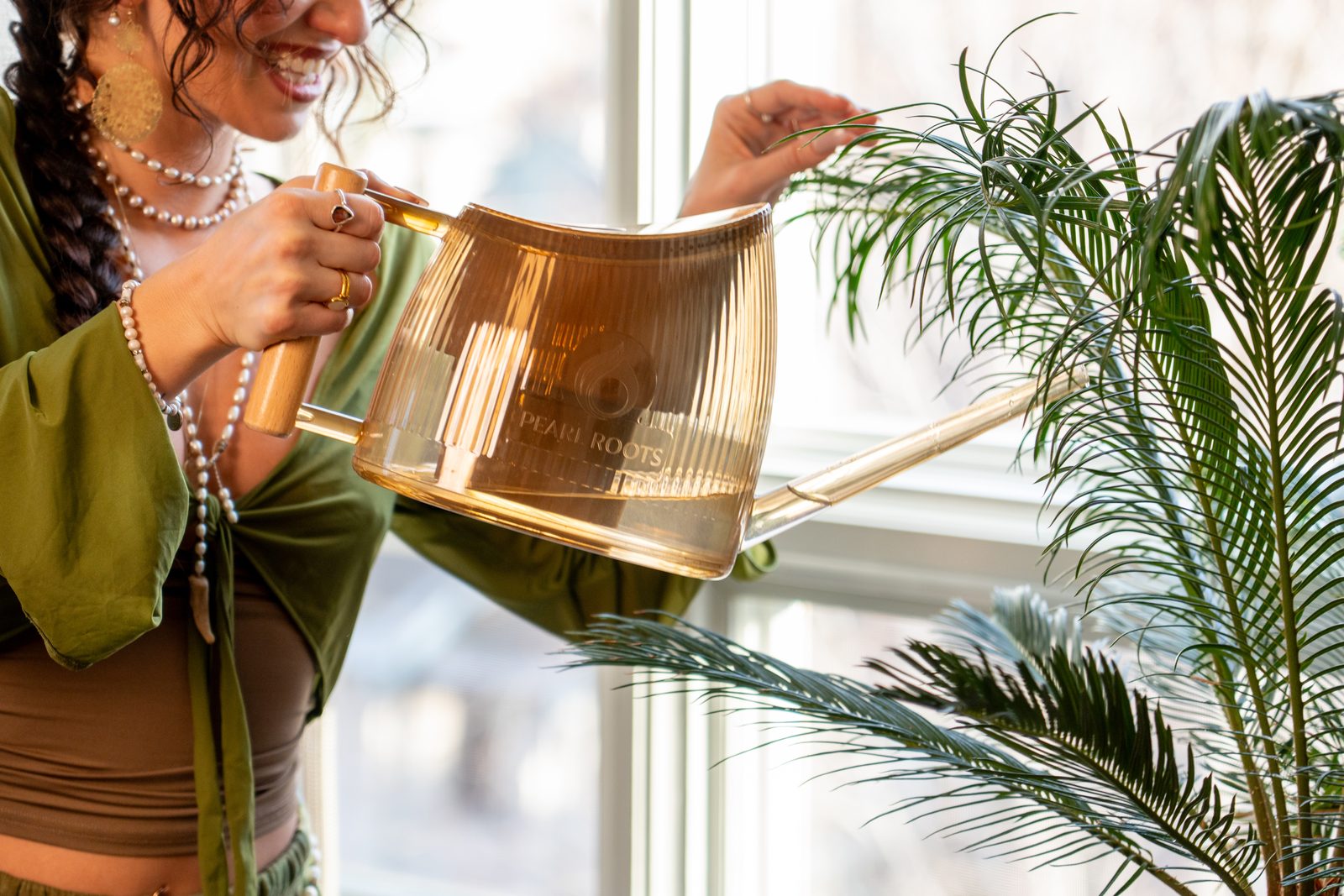
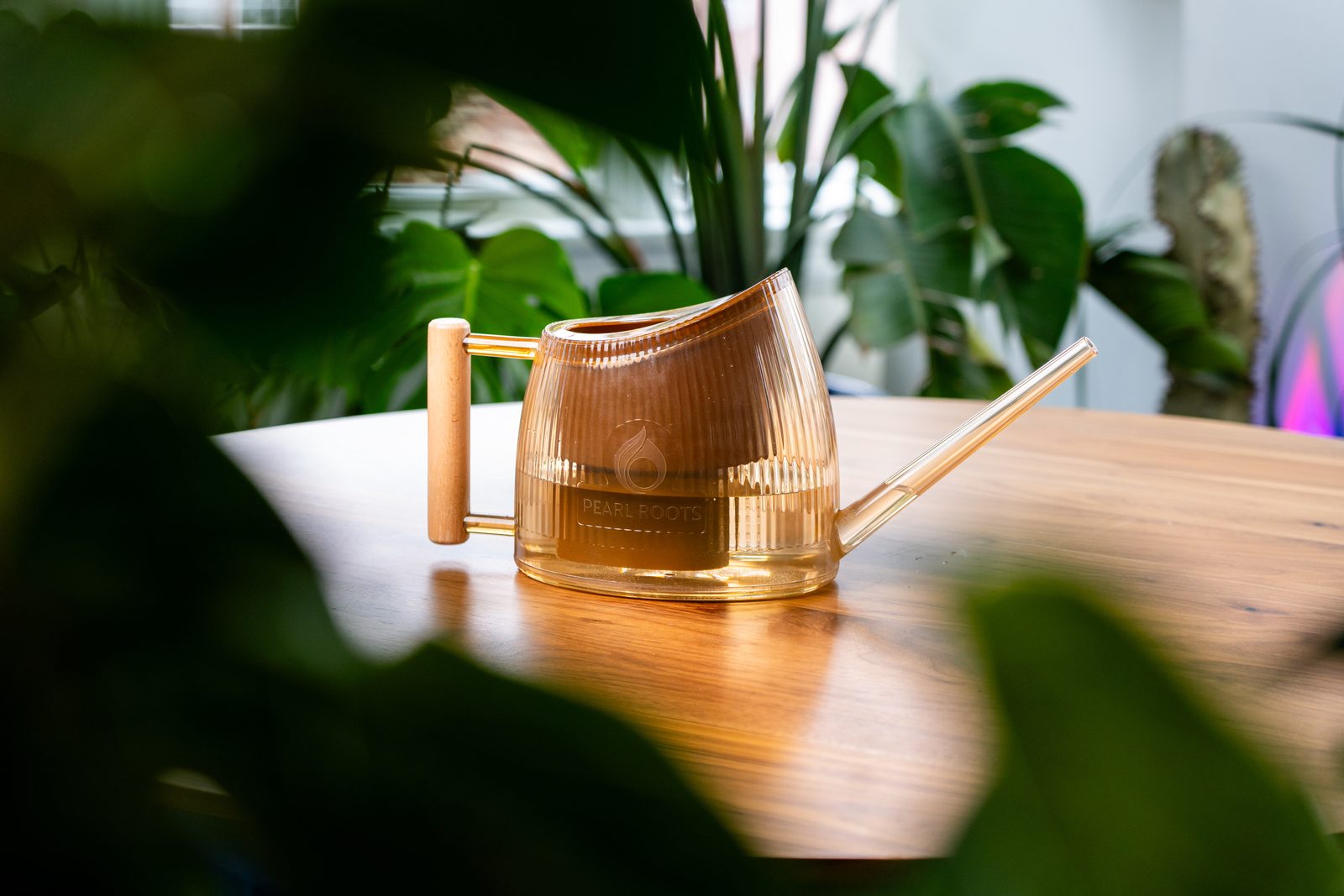
Watering Can With Filter and Remineralizer for House Plants
Filters chlorine, chloramine, fluoride and lead as you fill it, then adds back 20+ minerals
Free shipping · 30-day money-back guarantee
plus sales tax where applicable
Plants where this shows up first.
Peace lily
Yellows between the veins when soil pH creeps up on hard water.
Money tree
New leaves pale out as minerals build up in the pot.
Orchids
Roots stressed by chlorine stop taking up nutrients.
Calathea
Yellowing pairs with the brown tips it's famous for.
Pothos
Older leaves yellow early when salts accumulate.
Monstera
Chlorosis shows between the veins on newer growth.
Spider plant
Yellow streaks and brown tips arrive together.
Dracaena
Fluoride-sensitive; yellowing and tip burn on tap water.
Lucky bamboo
Grown in water, so every mineral in that water counts.
Gardenia
Iron lockout from high pH shows up as yellow new leaves.
What Pearl Roots does.
1. Fill from the tap
The Pearl Roots watering can has a multi-stage filter built in. No faucet or sink attachment - it's a watering can you pour with, like any other.
2. It removes what hurts
Chlorine, chloramine, fluoride and heavy metals are filtered out as the can fills - the chemicals that stress roots and lock out iron and magnesium.
3. It adds back minerals
The filter then adds back 20+ minerals, so every watering delivers filtered, remineralized water.
The Tap Water Plant Guide
Which 12 houseplants react to tap water, how to tell water damage from overwatering, and four ways to fix it — including the free ones.
What if it's really overwatering?
Then fix that first - no filter rescues soggy roots. Let the top inch of soil dry, make sure the pot drains, and match light to the plant. But if care is dialed in and the yellowing pattern points to pH, chlorine or salts, the fastest change you can make is the water itself.
Better water, tonight's watering.
- Free shipping · 30-day money-back guarantee
- Free shipping
- 30-day money-back guarantee
- Replaceable filter packs